
Setting up autonomous triads
Summary
Situation
- By late 2023, the centralized roadmap planning process was proving inefficient and time-consuming for leaders. Designers were frequently changing PMs, making it hard to build expertise and team cohesion. Leadership wanted faster velocity to reverse a decrease in new and expansion bookings.
Actions
- Proposed a shift to a “triad” model, where each Product Manager, Designer, and Engineering team would focus on a specific product area and metric. This decentralized roadmap planning, allowing triads to own their work.
- Aligned leadership on the new structure, created a 2024 design kickoff deck to guide the design team and introduced new processes like async reviews and a buddy program to support autonomy.
Impact
- The rollout was choppy, but the team quickly adopted new rituals, shipped more impactful projects, and improved expansion bookings.
- Leadership had more bandwidth to focus on external relationships, resulting in better advocacy for the team.
- Qualitative feedback showed strong support for the triad model, though communication and clarity around roles needed improvement.
Full Story
Late 2023: Identifying Inefficiencies in Roadmap Planning
- After nearly two years of using the centralized roadmap planning process, it became clear that the system wasn’t sustainable. The process was taking up too much time from leadership, and designers were frequently switching Product Managers (PMs) with each new project, making it hard to build expertise or maintain cohesive relationships with their teams.
- The lack of continuity also slowed down execution on larger projects and forced PMs to overextend resources when they had them. Additionally, the decreased bookings trend in my team (both new and expansion) made it essential to increase velocity, as leadership equated faster output with more revenue.
- Key Challenge: The centralized process consumed too much leadership time and lacked the agility necessary to meet increasing demands for faster delivery.
- Solution: I recognized that a more focused, streamlined approach was needed, so I began discussing potential solutions with a Product Director. We realized that having one PM, one Designer, and one Engineering team working together in a “triad” model would increase efficiency and accountability, creating stronger, more focused teams.
Mid-Q4 2023: Introducing the Triad Model
- After our initial discussion, I facilitated a larger session with all relevant Directors. I used FigJam to map out different product surface areas and aligned these with our scorecard metrics to identify the most critical areas of focus.
- We then assigned PMs and Designers to each area, ensuring that the product priorities were aligned with company OKRs. Engineering was more complex to align due to specific technology ownership, but we found a workable structure.
- Key Challenge: Not all designers could be part of a single triad due to the mismatch in numbers—7 designers and more PMs. As a result, 3 designers needed to split their time between two triads.
- Solution: I worked closely with leadership to finalize assignments, understanding the challenges of spreading resources while still maintaining focus. We emphasized that the triads would handle their own roadmap planning and self-adjust as needed, empowering them to take ownership of their work.
Late Q4 2023: Setting Leadership Expectations and Team Communication
- Before sharing the new triad structure with the broader team, I met with leadership to align expectations. We decided that triads would handle their own roadmap planning moving forward, eliminating the need for centralized planning. Leadership would still review roadmaps to ensure alignment with overall priorities, but the day-to-day planning and execution would now rest with the triads.
- We announced the new structure in December 2023. Initially, there was confusion within the team, especially about how roadmap planning and prioritization would now work autonomously.
- Key Challenge: Team members, especially in my design org, raised concerns about working independently, unsure how to plan and prioritize effectively without centralized guidance.
- Solution: I developed a 2024 design kickoff deck, which I presented at a design staff meeting in January. This deck outlined the principles for the year, the new surface areas, and clear guidelines on roadmap planning, project tracking, and rituals like design reviews. I also introduced new processes, such as async reviews and a buddy program, to help the team adjust to the new structure.
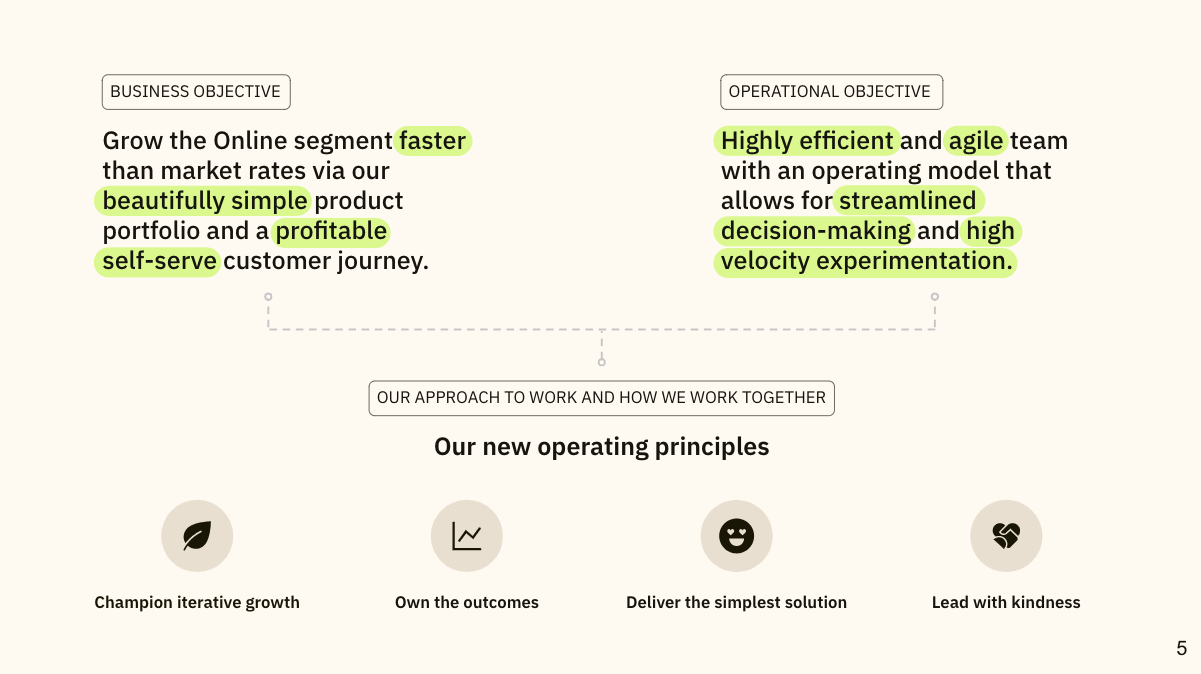
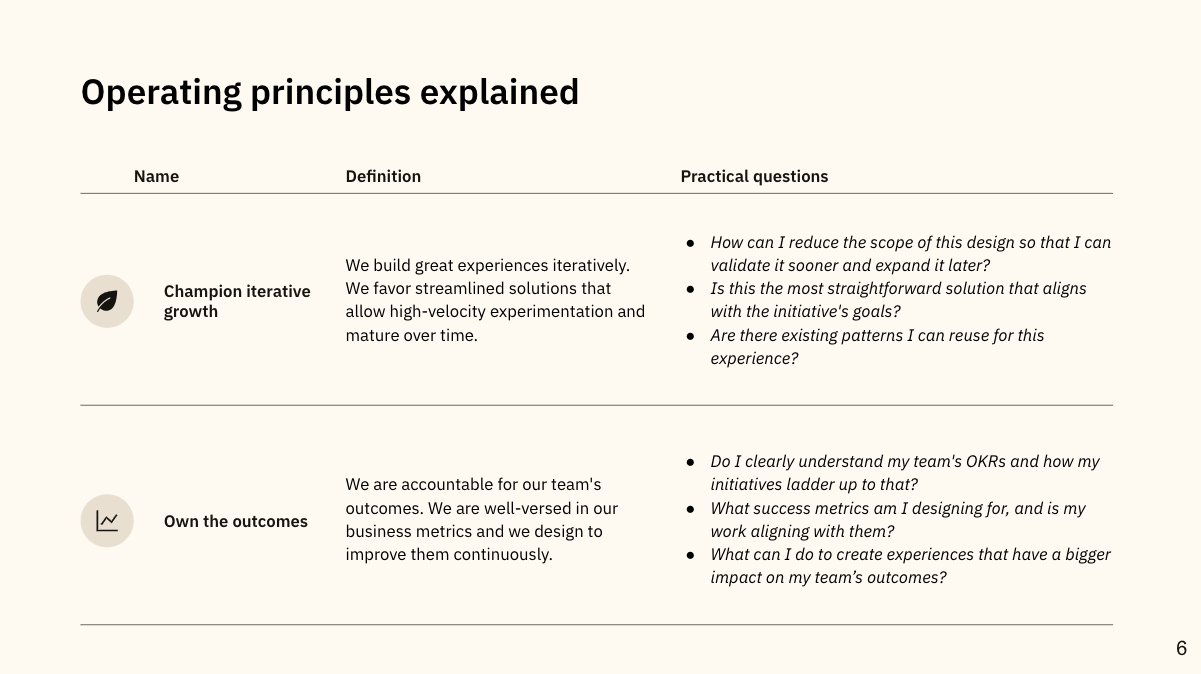
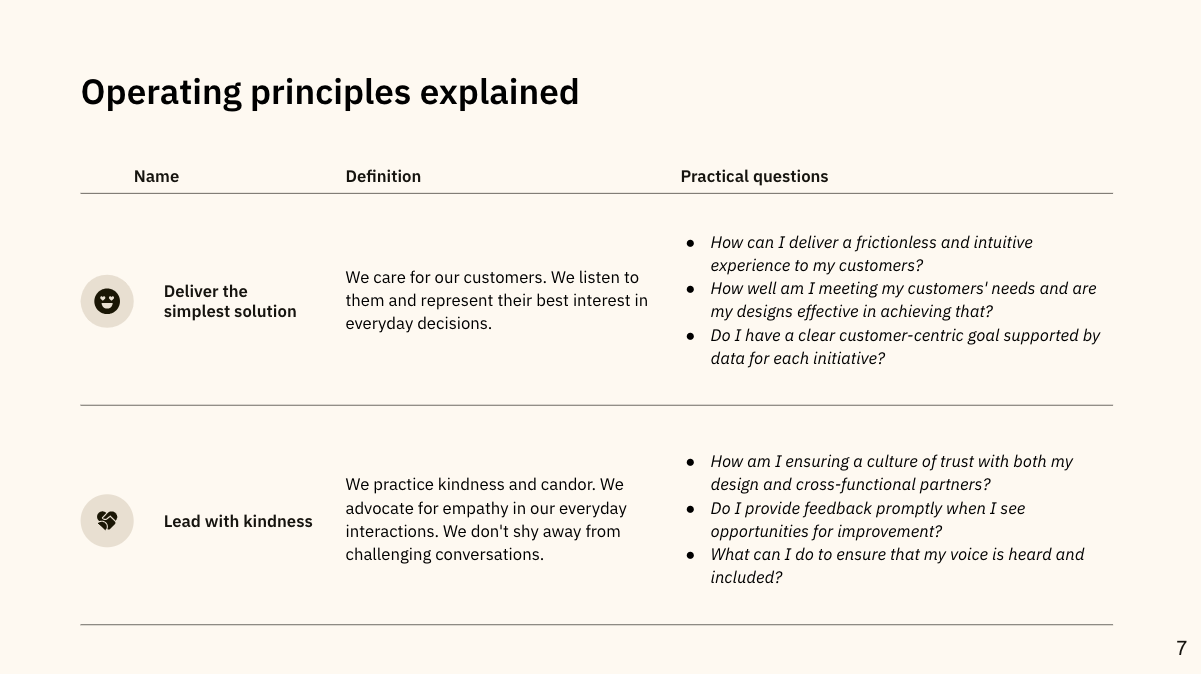
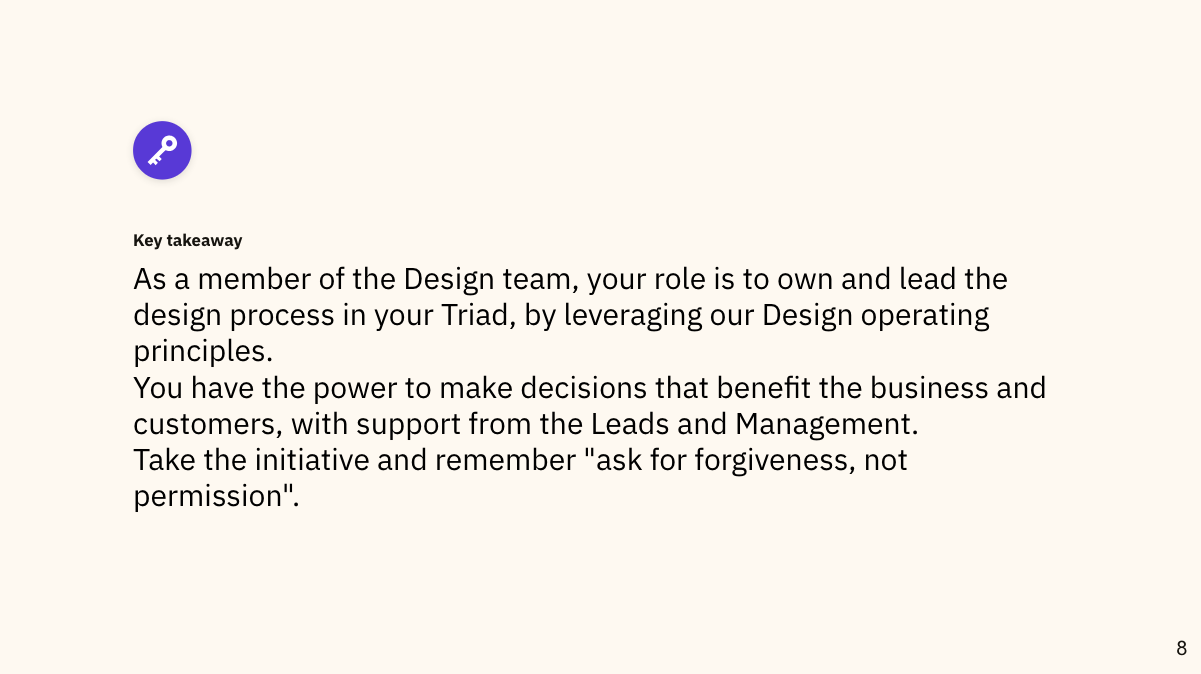
Slides I created for the Kickoff deck
January 2024: Kicking Off the Triad Model
- The kickoff deck helped clarify expectations, but the transition was not without its challenges. Half of the rituals and processes were already in place, but the other half were new, and it took time for the team to fully adapt.
- Despite this, the triads began executing on the Q1 roadmap. About half of the work was planned in advance, while the rest emerged reactively as the triads adjusted to the new way of working.
- Key Challenge: The transition was choppy, with ongoing confusion around roles and responsibilities within the triads.
- Solution: I provided ongoing support to the team, emphasizing the importance of self-management and making sure the kickoff deck remained a reference point for best practices and expectations.
Q1-Q2 2024: Impact and Continuous Improvement
- Although the initial rollout of the triads was rough, the team gradually adjusted to the new structure. The rituals and processes from the 2024 kickoff deck became well-integrated into the team’s workflow, and the triads began to perform more efficiently.
- Impact:
- The team started shipping more impactful projects, and we saw an increase in expansion bookings, which had been declining prior to the change.
- Leadership was freed from the time-consuming roadmap planning process, allowing them to build stronger external relationships and advocate more effectively for the team.
- Qualitatively, the feedback from the team was overwhelmingly positive. Designers appreciated the focus and autonomy the triad model provided, though there was still room for improvement in communication and role clarity.
Lessons Learned
- What Went Well: The triad structure increased efficiency, led to faster project delivery, and gave leadership more time for strategic initiatives. Designers appreciated the autonomy and focus the new structure provided.
- What Could Be Improved: The initial communication around roles and responsibilities could have been clearer. Additionally, I should have referred back to the kickoff deck more frequently to reinforce the new processes and expectations as the team adjusted.

